Last week, as part of the Stowarzyszenie IR Society Poland webinar series, I had the opportunity to interview Huizi Zeng, Head of ESG at East Capital one of the most recognised names in emerging and frontier market investing and an early ESG pioneer. We focused primarily on the governance pillar, drawing on East Capital’s 28 year experience integration ESG topics into its investment process.
Below is a short summary and a few of my personal notes from the conversation:
1- For many active investors such as East Capital, ESG considerations are firmly integrated into the investment decision process. The process boils down to identifying financially material factors that others may overlook and that could affect long-term value.
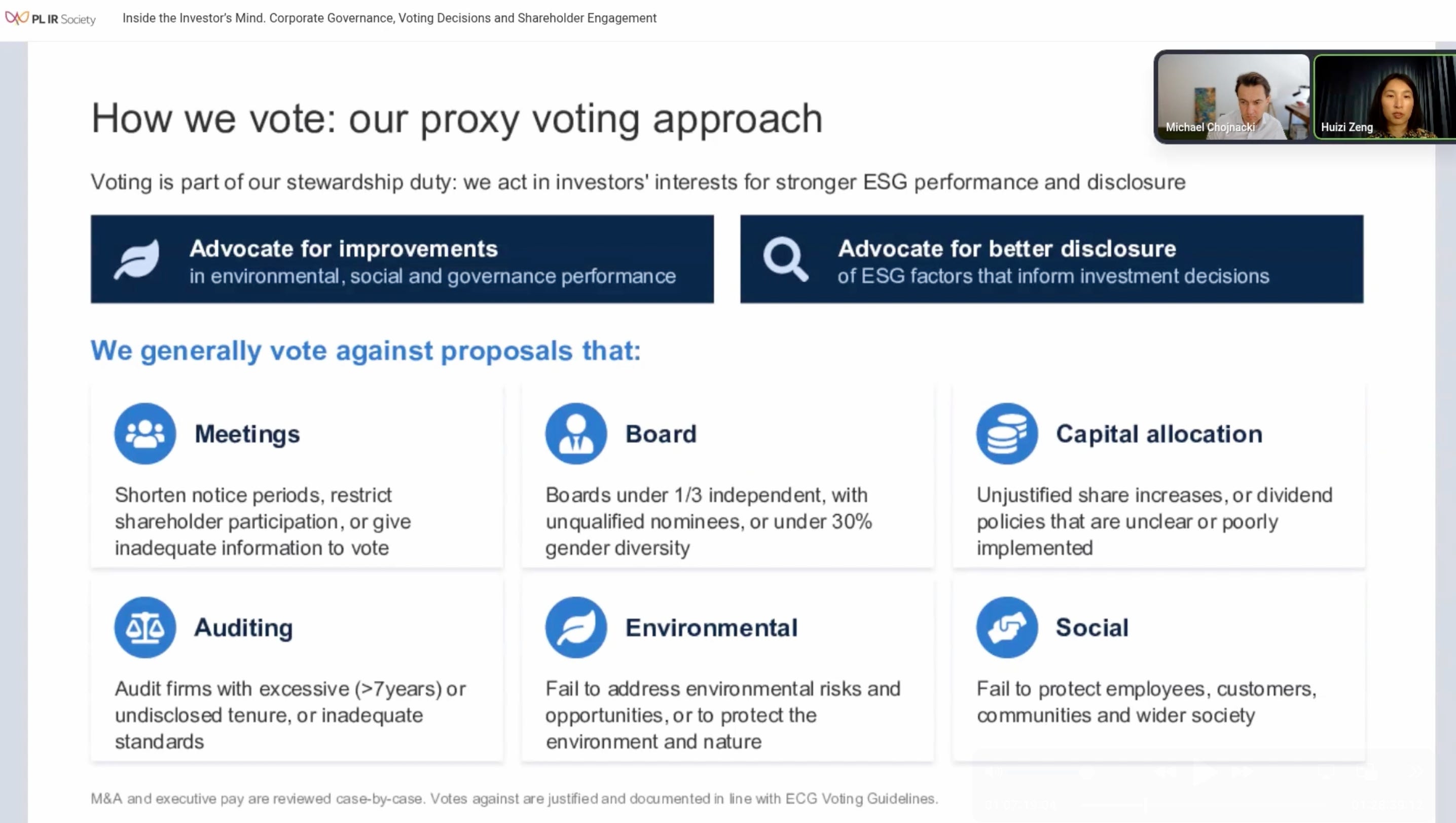
2- For Poland and CEE, and I suspect other markets as well, Huizi's ESG work priorities included; minority shareholder protection, genuine board independence (or indepdendence 'in substance'), capital allocation, remuneration (with KPIs ideally tied up to the strategy and performance), credible climate-transition plans and timely disclosures.
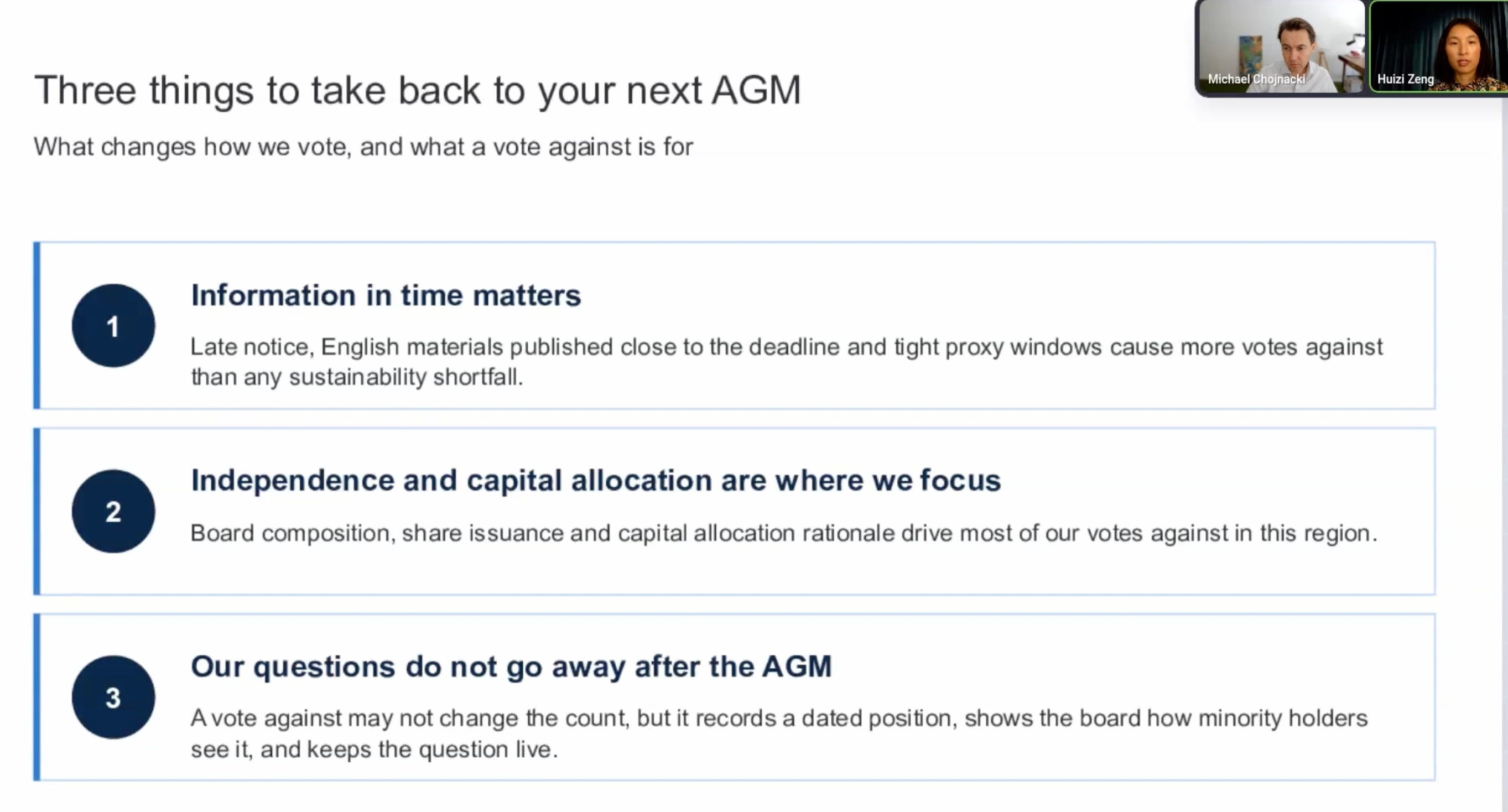
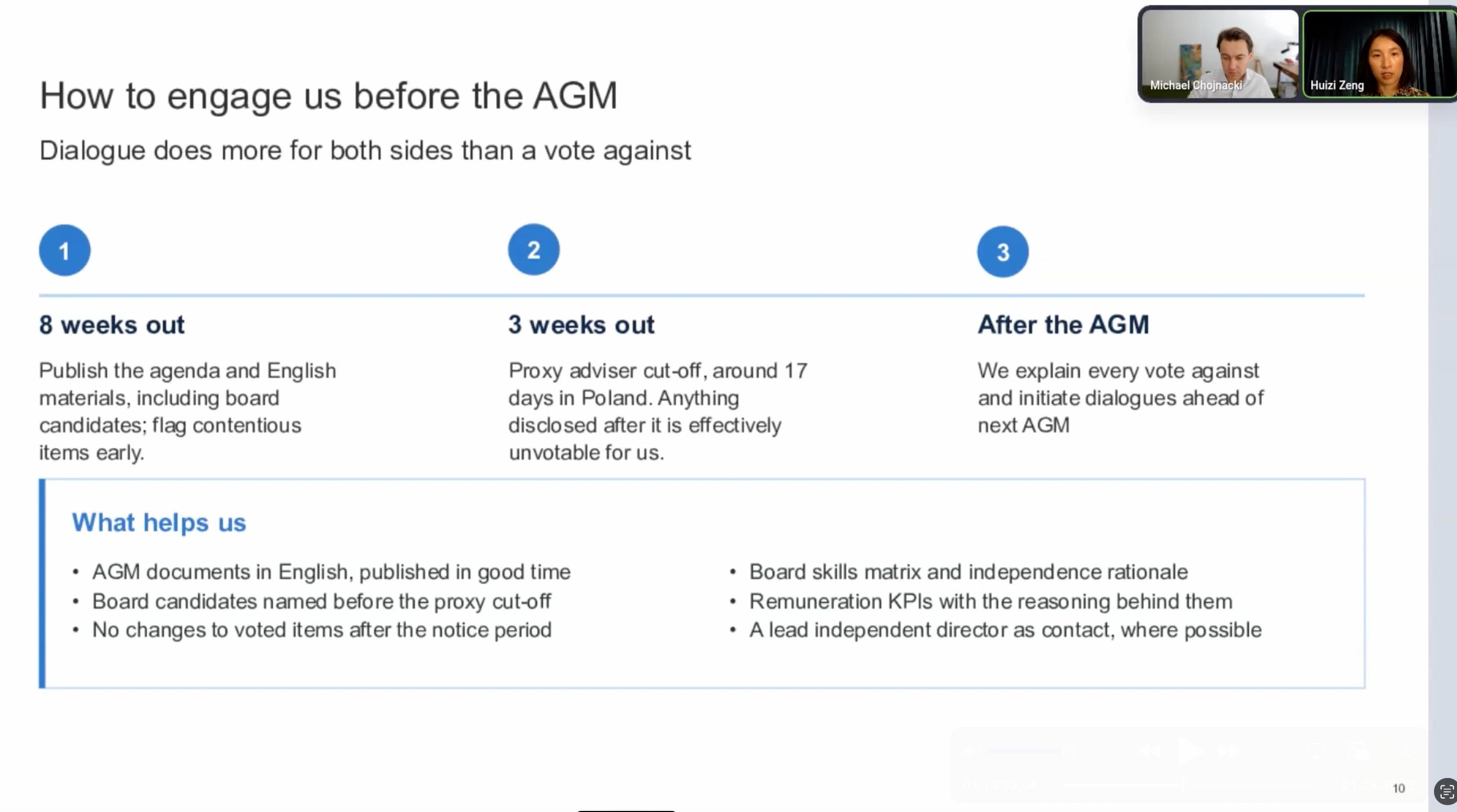
3- Timely disclosures of AGM and EGM information specifically is a major practical obstacle. East Capital needs to submit voting decisions at least three weeks before the meeting, so it needs the relevant materials well before that point. Late disclosure can cost a company shareholder support.
4- The direction of improvement can matter more than the starting position. The practical idea is that companies will do well to explain what is improving, what remains unresolved and what evidence demonstrates progress in material ESG topics.
5- More ESG reporting does not necessarily mean more useful information. Especially for smaller companies, she prioritised depth, relevance and materiality. A detailed explanation of a few issues that affect the business can be lot more useful than broad reporting that reveals little about actual decisions.
6- East Capital welcomes dialogue on ESG, including where improvements are still needed. Huizi described direct engagement with companies as an important part of East Capital’s approach. For IR teams, the opportunity can be to explain challenges openly, discuss credible improvements and maintain an accessible channel for dialogue throughout the year not just strictly before annual meetings.
Few supporting slides: